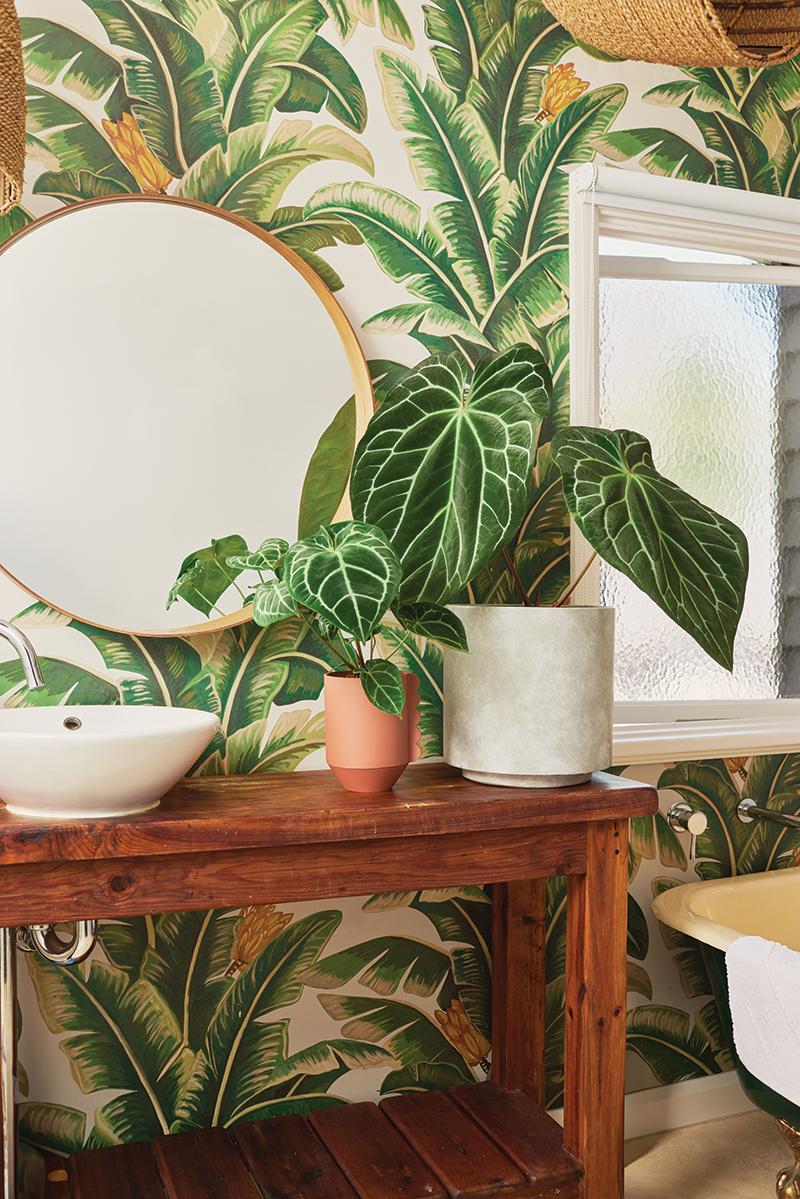
Crystal anthuriums love humidity – a bright bathroom suits them perfectly.
Time to create a thriving green sanctuary at home. And Your Garden editor and horticulturist, Tammy Huynh gives the best advice on caring for yours.
Welcome to the wonderful world of Iindoor plants
Growing plants can seem straightforward – they need sunlight and water – but without understanding each plant’s unique needs, we may set them up for struggle rather than success. So read on to get your best results!
Give them light they love
Light is perhaps the most crucial aspect of plant care. Plants rely on light to convert water and carbon dioxide into energy through photosynthesis. Without adequate light, no amount of watering or feeding helps – plants struggle to thrive.
Understanding light levels at home
Bright, indirect light:
diffused through curtains or filtered by windows – is ideal for many species, especially tropical varieties. Direct sun is intense and suits cacti and succulents but can scorch most indoor plants
Medium light:
occurs further from windows but can be good, while low light receives minimal sun.
Low light:
Few of your plants will tolerate low light and none will survive in total darkness. Your best lighting guide is to see if you can read comfortably in a spot for several hours. If so, it’s perfect for plants
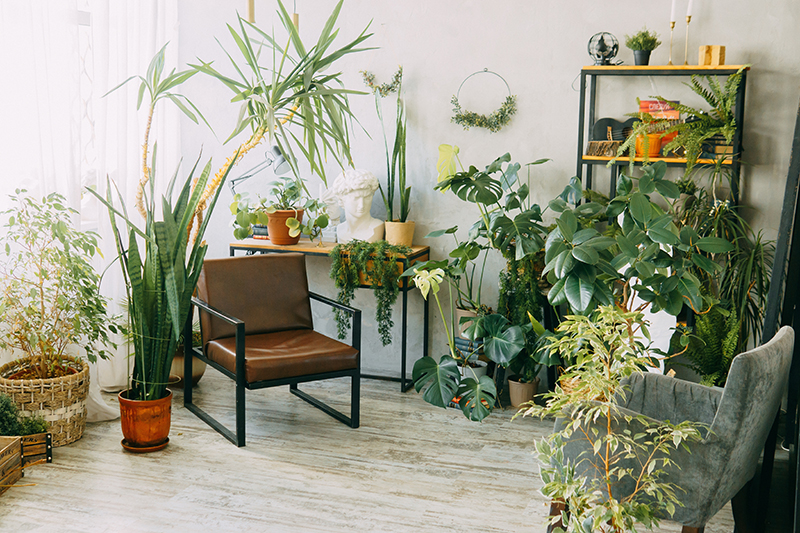
Group house plants together for a lush, layered jungle feel –instantly inviting!
Feed them well
Fertilisers can be confusing but plants need more than sunlight to thrive. They require essential nutrients from the soil or potting mix, mainly nitrogen (N), phosphorus (P) and potassium (K), plus trace minerals, to support growth, roots and overall health. Over time, these nutrients deplete, so continuing to feed plants is necessary Feed them during active growth, usually in warmer months or year-round in controlled environments. How often you fertilise depends on the product, so always follow label instructions.
Houseplants don’t just fill a space – they change how it feels, bringing life, calm and a connection to your natural world indoors.
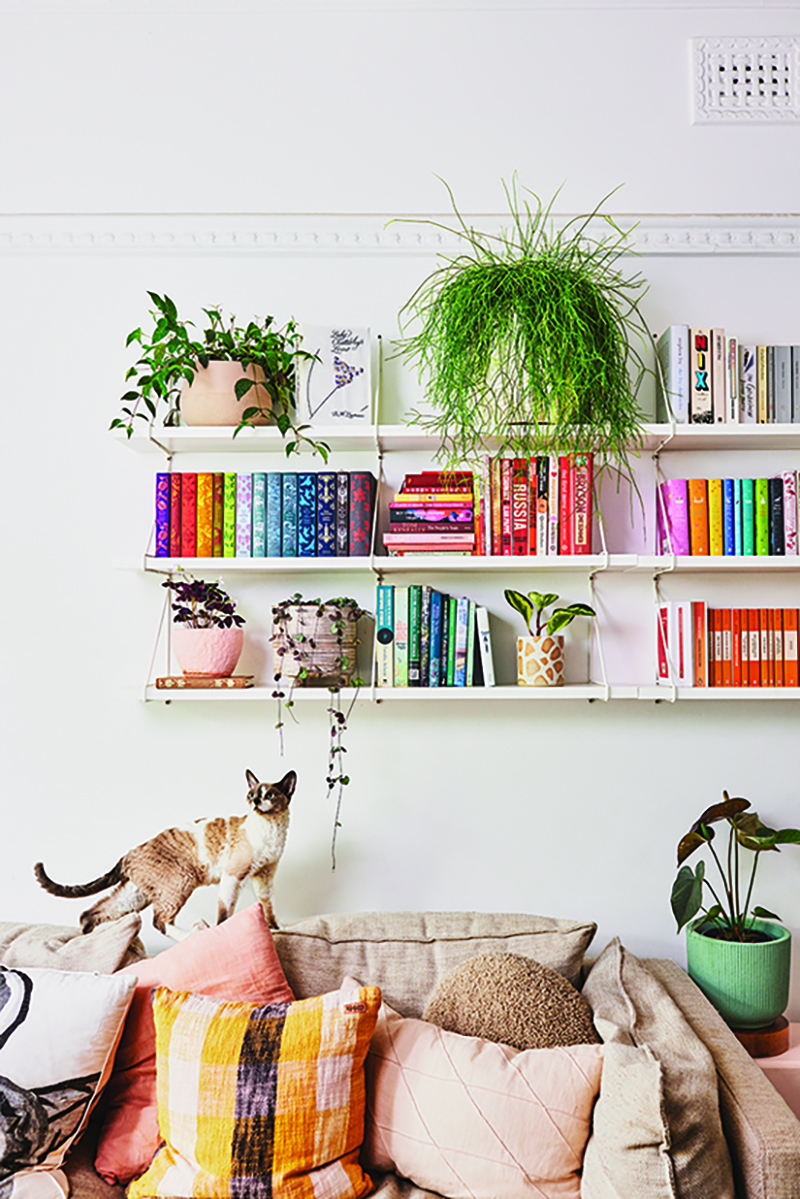
Weave houseplants through shelves and books to soften lines and add a natural touch
"Mix trailing plants with movement and just plain creativity"
Find your plant's water flow
It can be tempting to follow set watering schedules but plants need individual care. Your home’s conditions and the seasons affect how quickly potting mix dries, so watering needs will vary.
Your best guide is the finger test.
Insert your finger 2.5–5cm into the mix. If dry, water, if moist, leave for a few days. Lifting the pot can also help – dry pots feel lighter.
Water until it drains from the base of the pot
This ensures plants get a proper, thorough drink.
Add a little humidity
Many houseplants come from humid, warm rainforest areas. While adaptable, some need higher humidity. Indoor heating, air conditioning, open windows and draughts can dry the air, causing moisture loss and brown leaf edges. Humidity often drops in cooler months, but can fluctuate year-round. Even when your plants aren’t actively growing, maintaining humidity helps prevent stress for them and foliage damage.
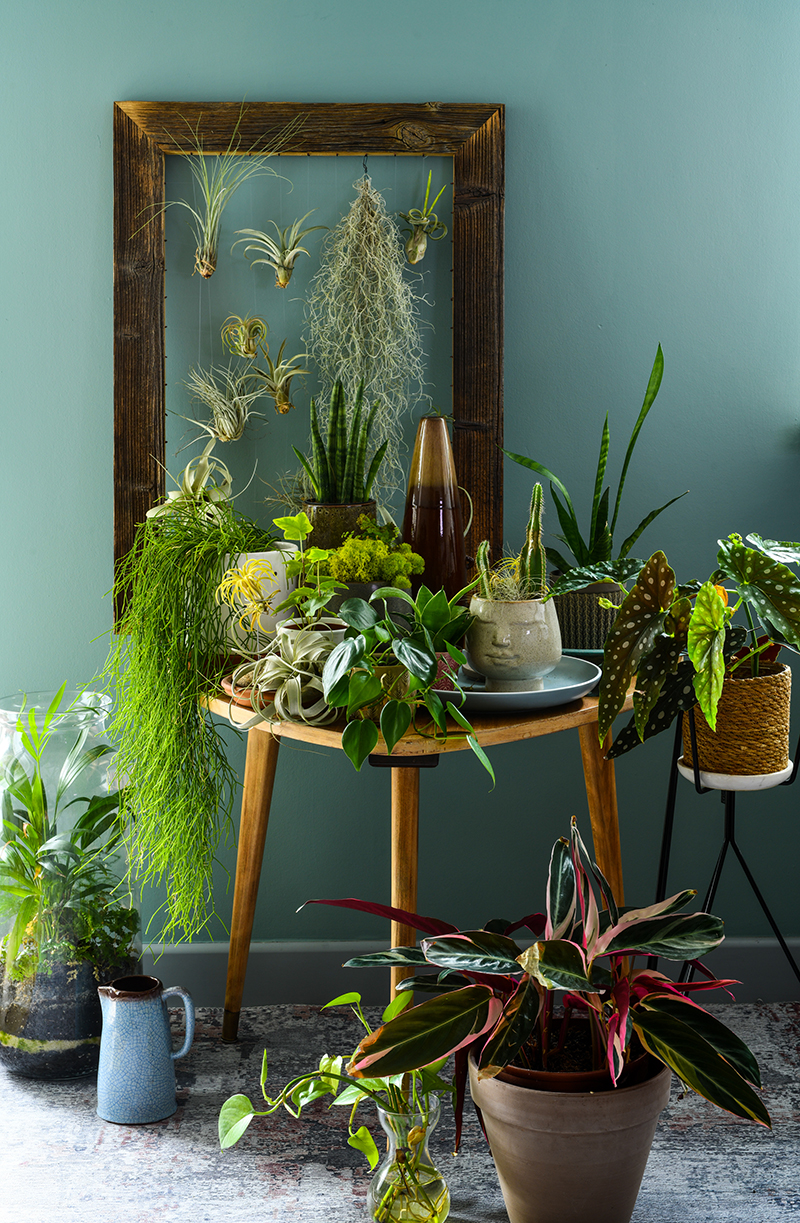
Pair plants with unique pots and objects to give displays character
Ways to boost humidity
TRY THESE DIFFERENT METHODS TO INCREASE HUMIDITY.
Group plants together
to create a humid microclimate through shared moisture release but keep cacti separate.
Use a humidifier
to add consistent moisture to the air, especially in enclosed spaces.
Set up a mini greenhouse
which traps warmth and humidity for tropical plants.
Add water bowls
so evaporating water increases local humidity around plants.
Use a pebble tray
beneath pots so as water evaporates. It increases the humidity around the plant.
Place plants in the bathroom
as humidity from showers benefits moisture-loving plants
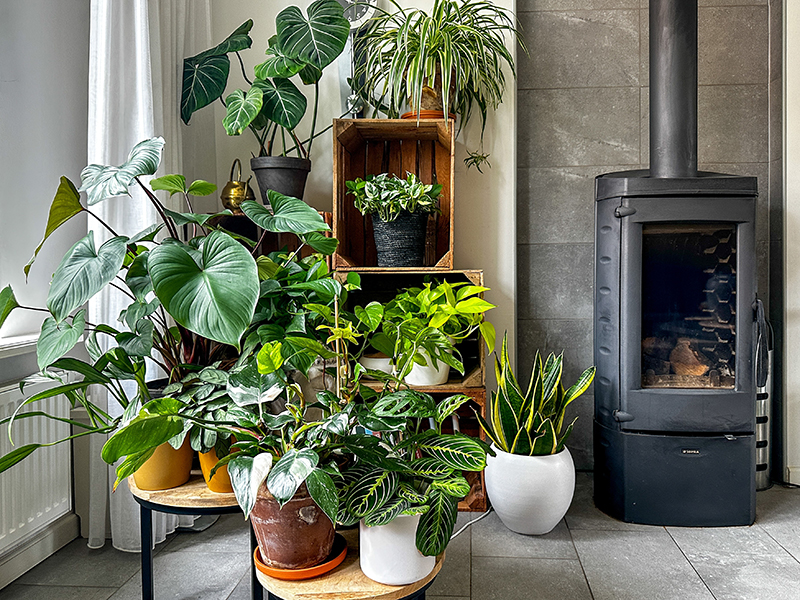
Use tables and crates to stagger your plants at different levels
Repotting your plants
When you bring home plants from the nursery or garden centre, there’s no need to repot them straight away – unless you absolutely want to or you found one on the clearance rack that has seen better days.
To decide if your plant needs to be repotted, look out for these signs.
-
Roots are emerging through drainage holes at the bottom of the pot or pushing up through the surface of the potting mix.
-
The potting mix is compacted and hydrophobic (water repellent).
-
There is little to no new growth or the plant appears stunted.
-
The plant has become top heavy with much more growth above the potting mix than its pot can support.
To repot your plant
You’ll need a sharp pair of secateurs or snips, a new pot (one size up), fresh potting mix and a watering can. Then follow these step-by-step instructions.
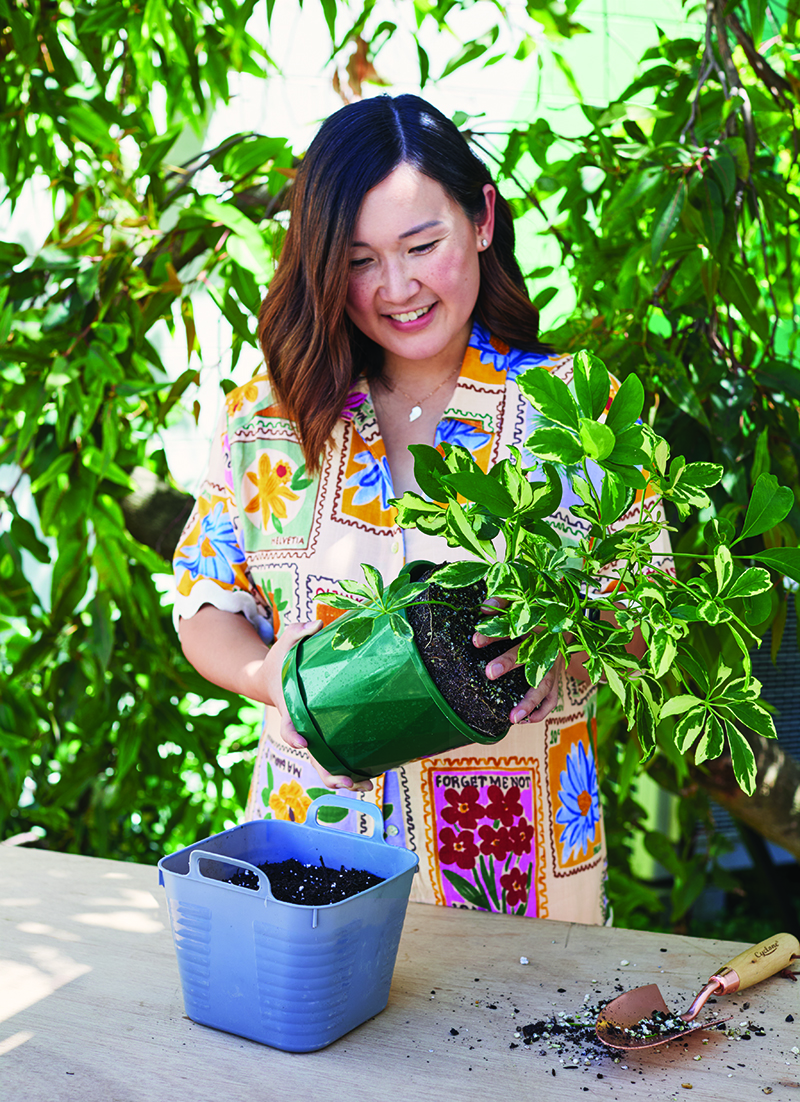
STEP 1.
Squeeze the pot to help loosen the root ball.
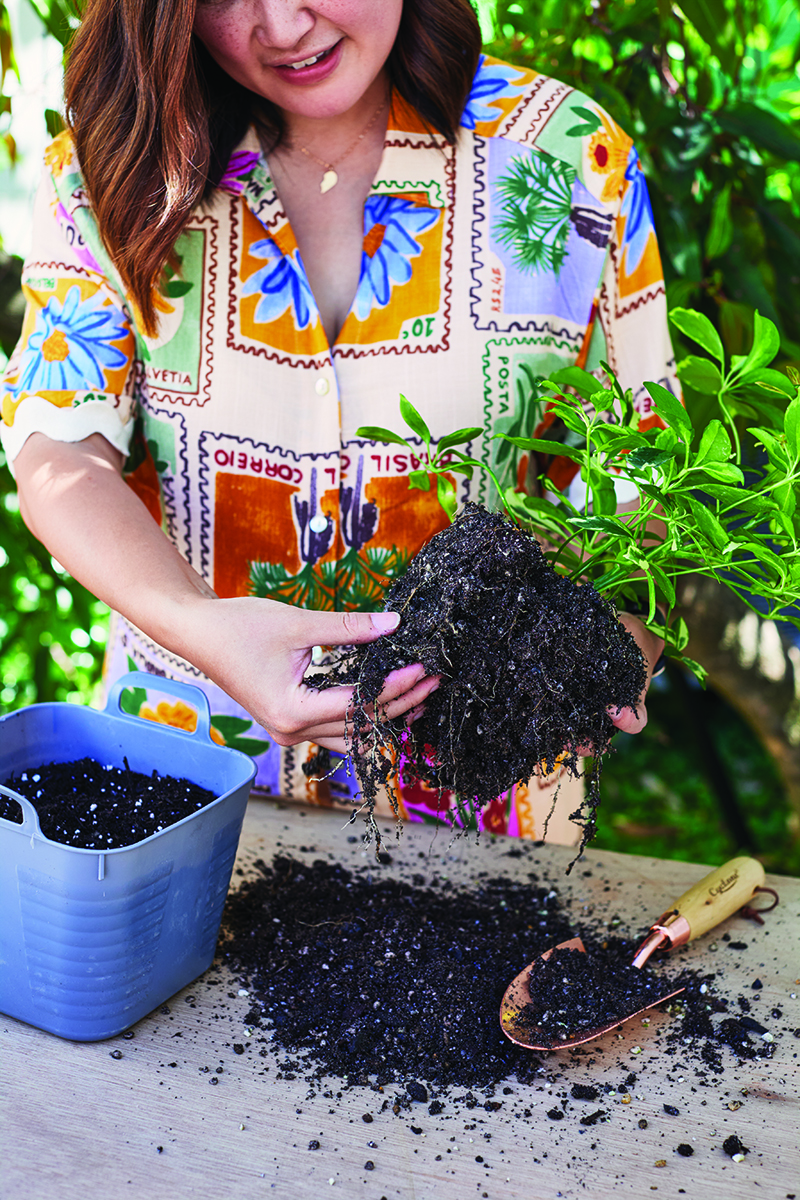
STEP 2.
Slide the plant out of the pot. If large roots are extending through the drainage holes and making the pot difficult to remove, trim them off.
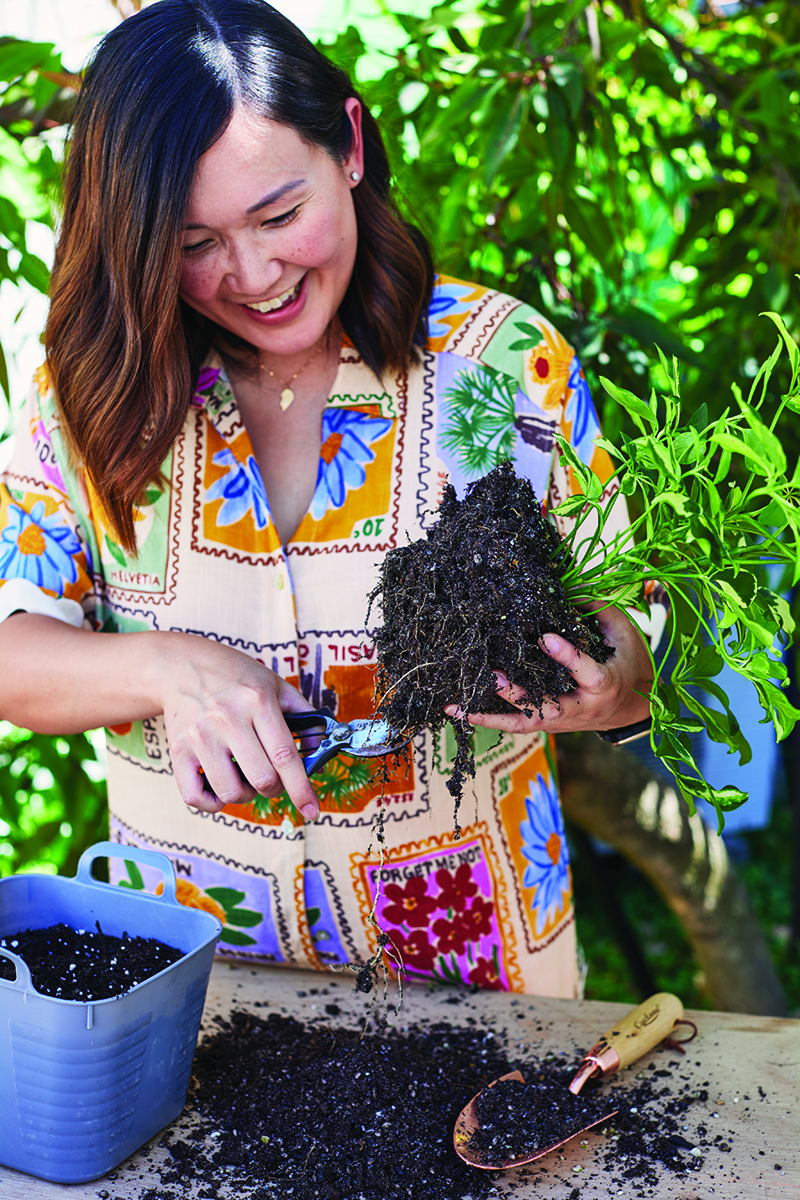
STEP 3.
Tickle the root ball to loosen the roots, untangling any circling roots your find and trimming away any dead or damaged sections.
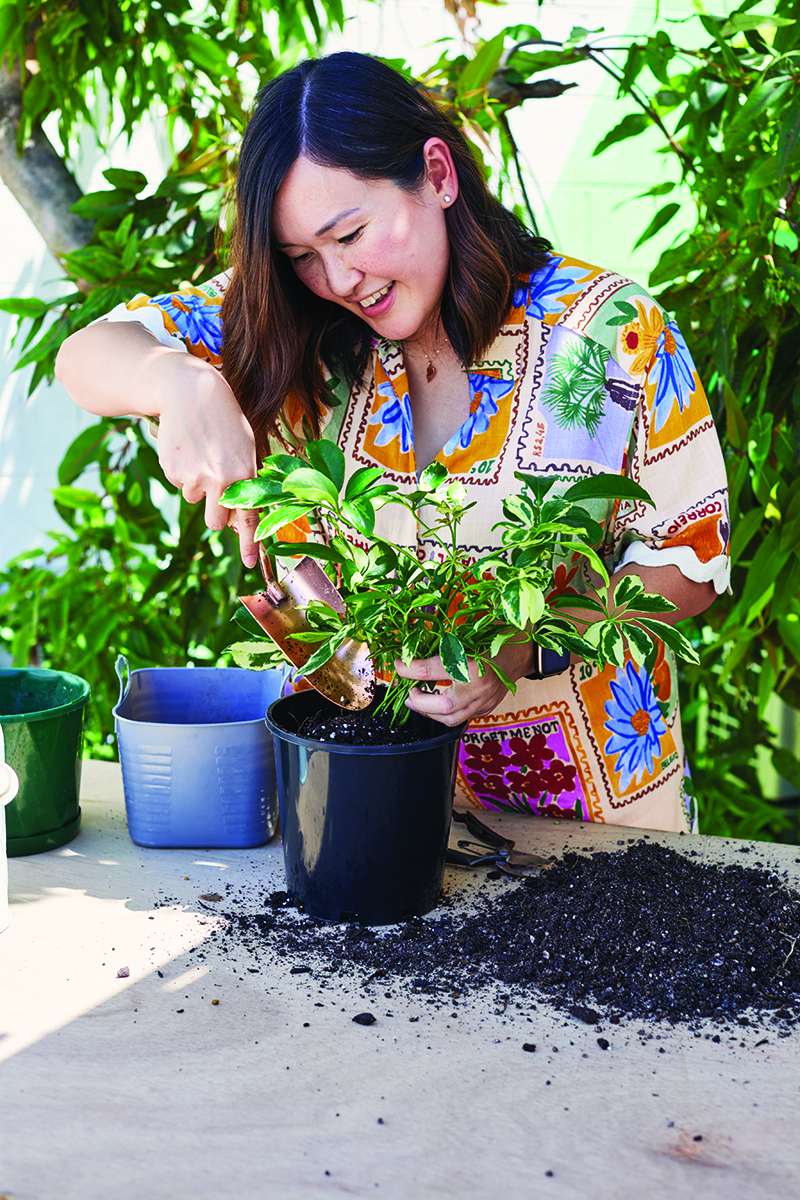
STEP 4.
Partly fill the new pot with potting mix, position the plant in the centre and backfill around it. Ensure the final level of the potting mix is the same as it was in the previous pot to avoid burying the stem or exposing the roots.
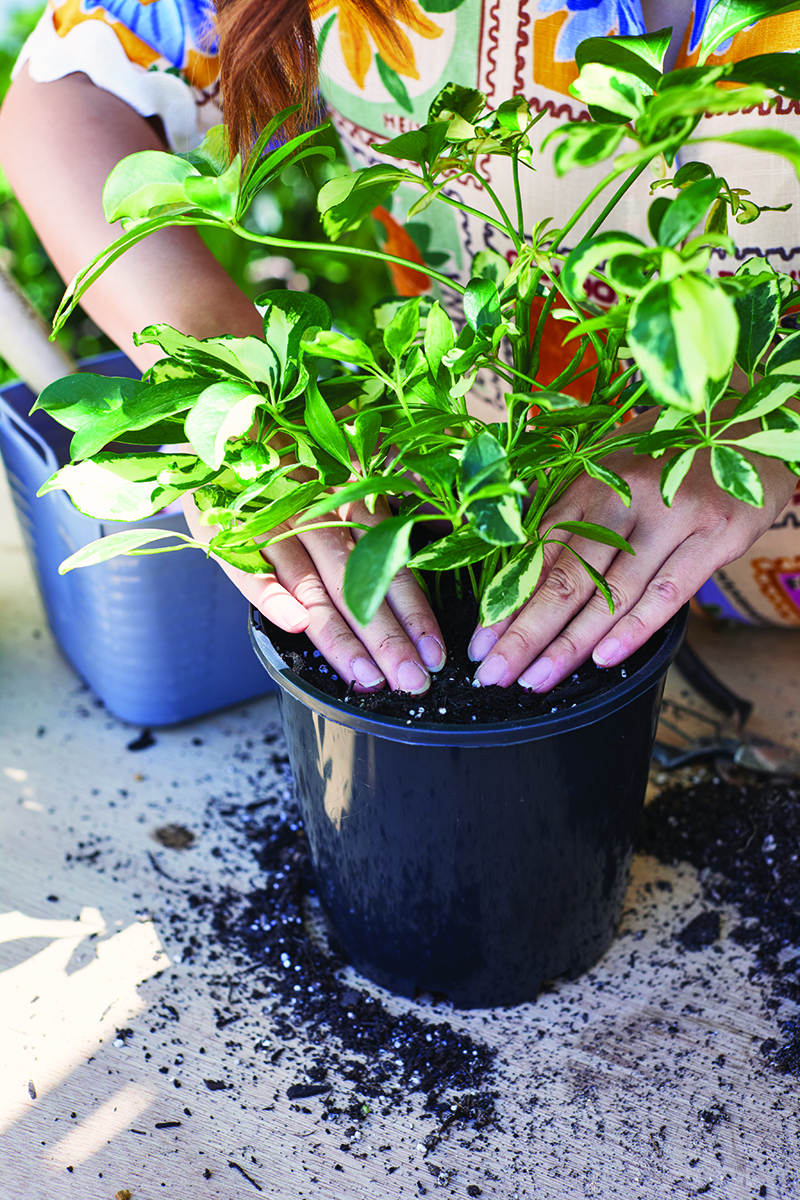
STEP 5.
Lift and tap the pot gently on a surface to settle the potting mix. Add more potting mix if necessary. Press down firmly on the mix, ensuring that the plant is stable.
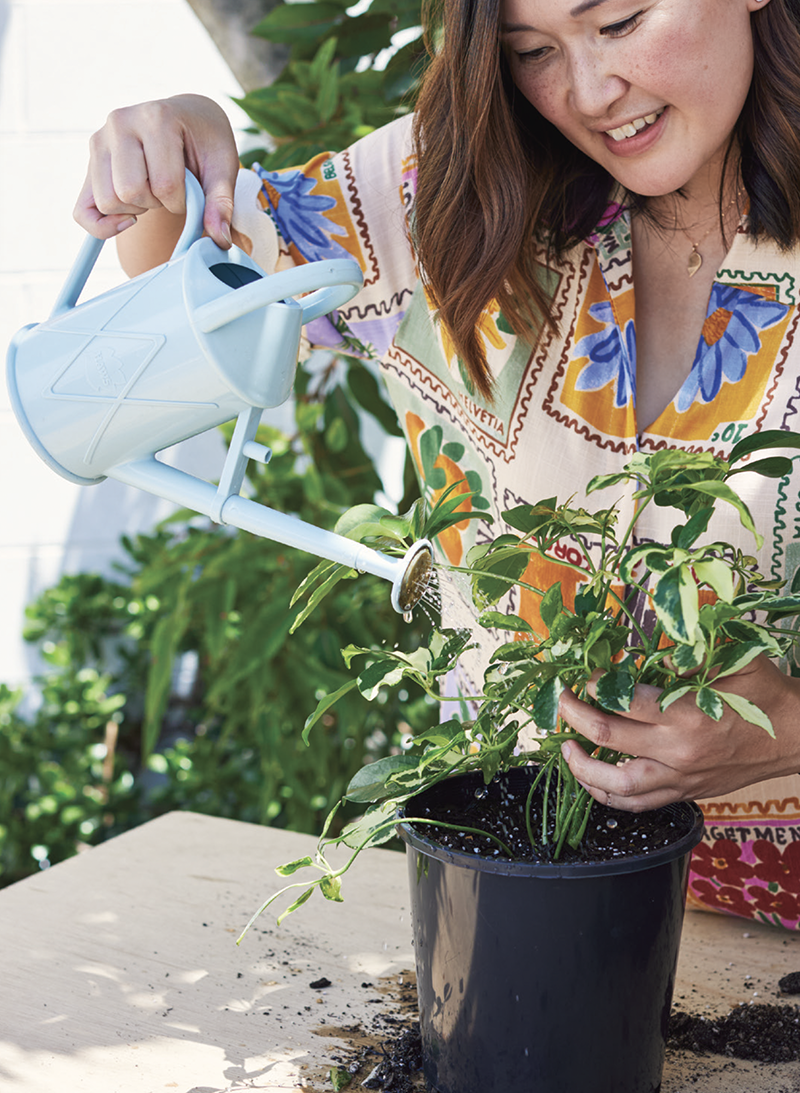
STEP 6.
Water in well, ensuring that the water runs through the drainage holes at the bottom of the pot.
We hope you have enjoyed this article so far.
One of the many benefits of Garden Clinic membership is full access to our website. Members please log in to view the complete articles.
If you are not a Garden Clinic member and wish to access our website as well as enjoy the many benefits of membership, including access to our Helpline 7 days a week, please visit the link below to join us.