Broaden your palette of flowering trees with these beauties from the warmer parts of the world - they all thrive in Sydney.
Words: Paul Urquart
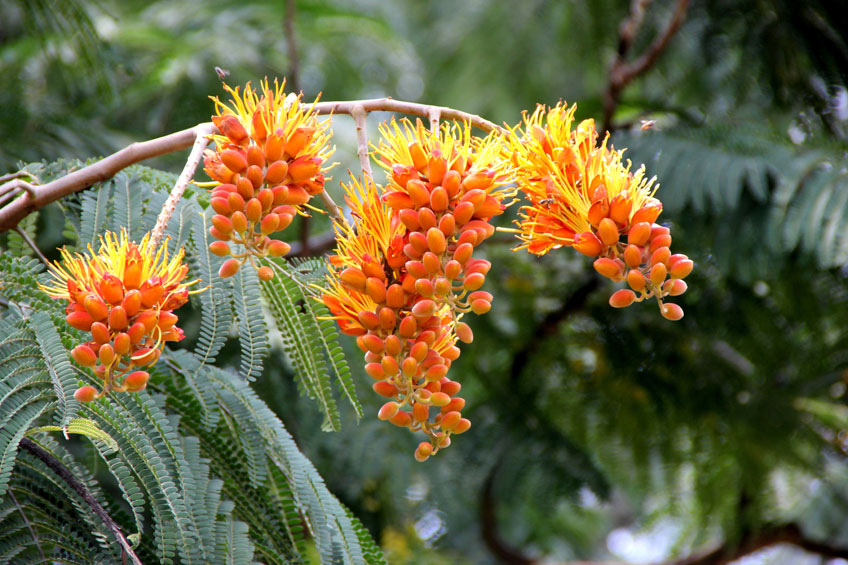
Colville’s glory tree
Colvillea racemosa
Birds, bees, butterflies and gardeners all love the luminous orange flower panicles of this Madagascar native. It adapts well to climates like those in
coastal Queensland and Sydney, and will even recover from frosts once established. Choose an open sunny position with well-drained soil as it hates
wet feet.
Parrot tree
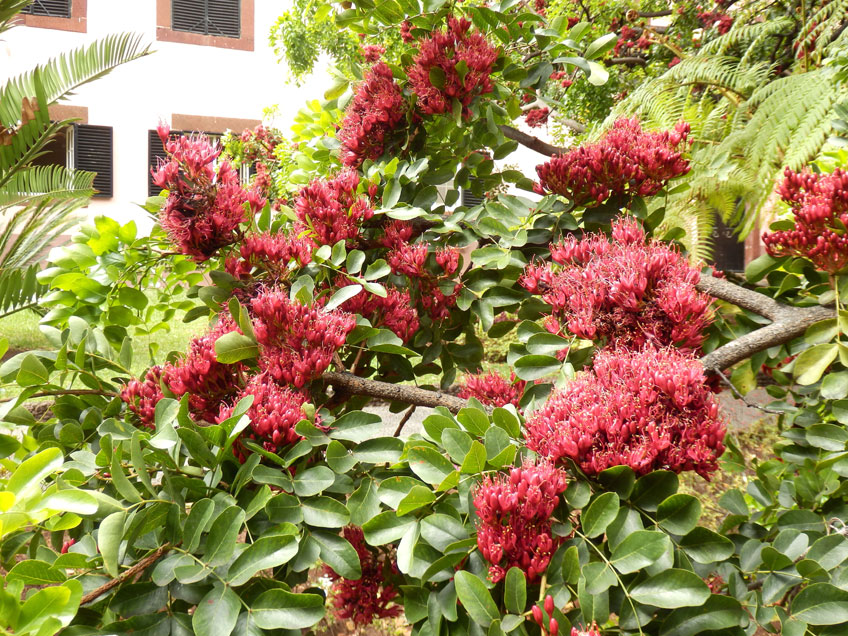
Schotia bracepetala
Parrots are attracted to the nectar-rich, red flowers of schotia, hence its common name. It comes from the warmer parts of southern Africa, is common in
tropical and subtropical areas, and is happy enough in the warmer parts of Sydney. Plant it as a shade tree, but not near paved areas due to all that
nectar! It prefers a light, well-drained soil in a sunny north-facing position.
Golden rain tree
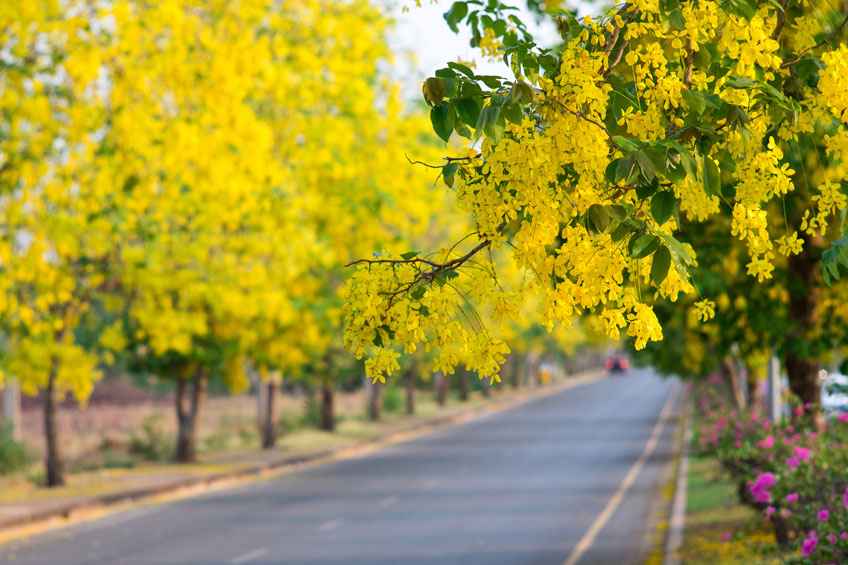
Cassia fistula
Massed panicles of golden yellow flowers in summer is the draw here. Intolerant of cold conditions, cassia thrives in a warm microclimate in Sydney or
the NSW Central Coast, where it is a considerably smaller trees than it is in the tropics. Plant near a wall or a warm paved area and avoid heavy soils.
It can be weedy in Queensland.
Golden trumpet tree
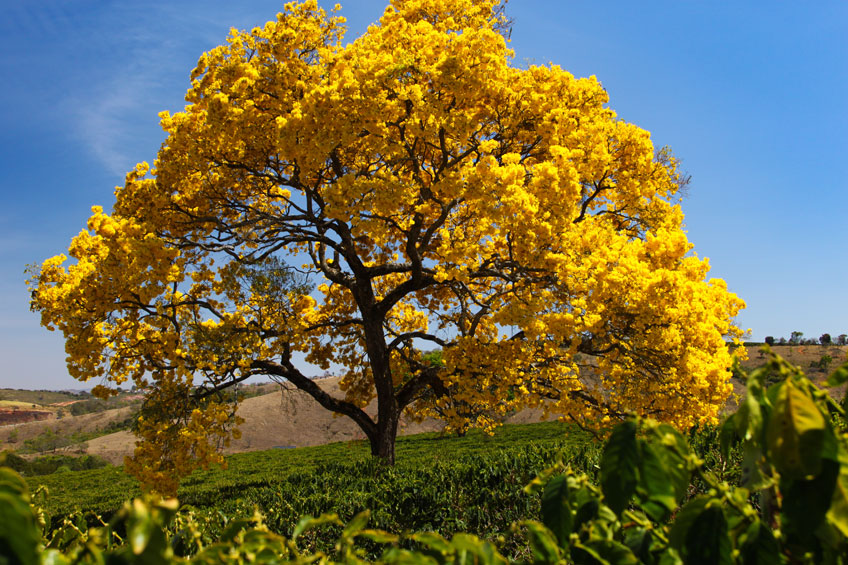
Handroanthus chyrsotrichus
syn. Tabebuia chrysotricha
There are many different tabebuias, all from South America, with a similar form and size to jacarandas. This yellow one is said to be the most cold-tolerant
and I have also seen pink-flowered T. rosea and T. palmeri thriving outside ofthe subtropics, but they are not for areas with regular
frost or long cold winters.
\
Cape chestnut
Calodendron capense
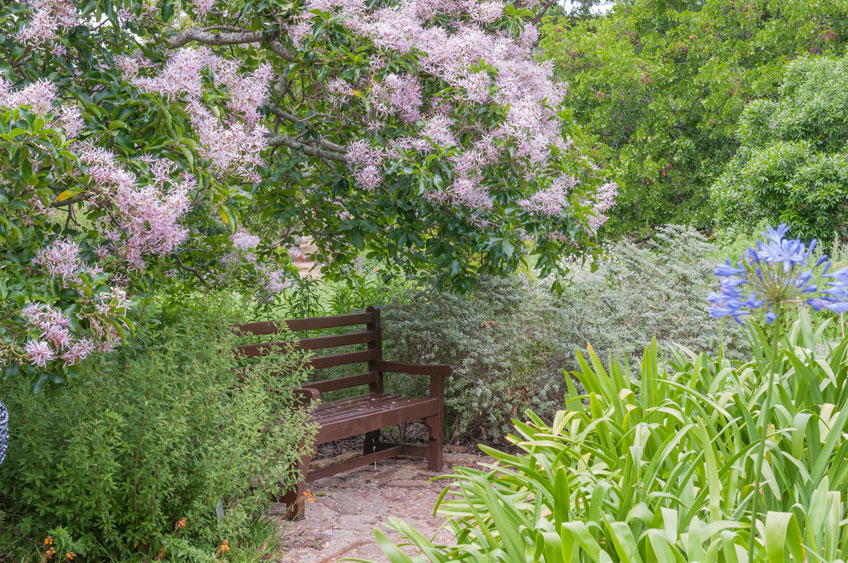
This South African native is a spreading shade tree for larger gardens, similar in size to jacaranda with blooms around the same time. It’s much more cold-tolerant
than other trees listed here and prefers an open sunny position, with rich moist soil and good drainage. Flower colours range from light pink to a
greyish form of pink so source a grafted tree for reliable colour.
Red bauhinia
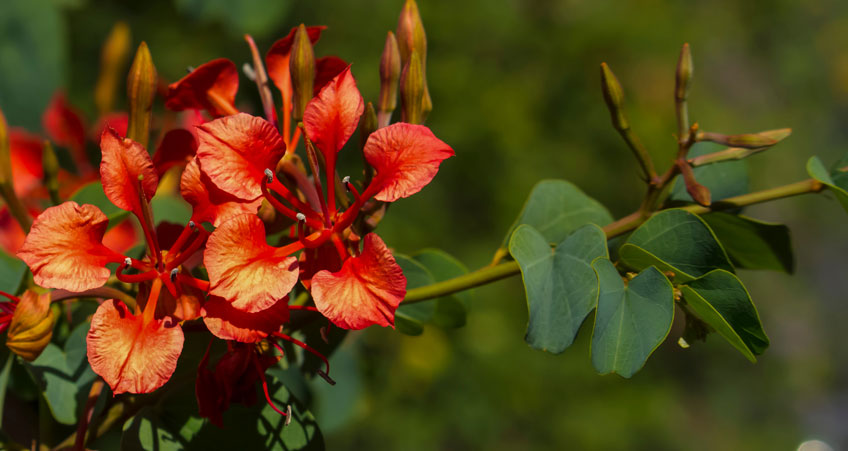
Bauhinia galpinii
Strictly speaking this is a large spreading shrub up to 2 metres tall by 4 metres wide with beautiful orange butterfly-like flowers summer- autumn. It
can be trained as a small tree, pruned to shape in late winter (early spring in cooler areas). Native to South Africa, it does well in Sydney and regions
further south but can be weedy from Brisbane north.
Tips for top trees
Encourage speedy growth on young plants to help them establish fast for better winter survival:
Feed in mid-spring and summer with a good organic fertiliser such as Sudden Impact for Roses.
Keep moist in dry summers.
Use Seamungus in summer to help protect young plants against winter cold and frost.
Daleys Fruit Tree Nursery www.daleysfruit.com.au in Kyogle is a good source for many of the trees above.